I woke up yesterday tasting dust.
Not metaphorical dust—actual grit on my tongue, the kind that makes you blink twice and wonder if the city secretly paved my bedroom with chalk. The dog was sneezing in stereo, my partner’s “summer cold” had stretched into its third month, and the white dresser I swore I’d just wiped down looked like someone dusted it with cocoa powder. I stood there, middle of the night, flashlight on my phone, watching motes drift in a lazy ballet, and thought: I breathe this. All of it. Every night.
That’s the moment the vague idea of an air purifier stopped being a “nice-to-have” and became a quiet little obsession.
Why “Best Air Purifier for Everything 2026” Isn’t Marketing Hype—It’s a Survival Kit
Here’s the thing nobody tells you at the big-box store: most purifiers are built like one-trick ponies.
- The cheapie on end-cap? Great at pollen, blind to wildfire smoke.
- The sleek Scandinavian tower? Sexy on Instagram, useless at the litter-box funk.
- The hospital-grade unit your cousin swears by? Sounds like a jet taxiing in your hallway and still lets VOCs skate right through.
Translation: You end up stacking two, sometimes three machines in the same room, playing musical filters and watching your energy bill crawl north. There had to be a better way—one box that actually earns the title “best air purifier for everything” without the asterisks.
The Two-Layer Reality Check (a.k.a. How I Learned to Stop Worrying and Love the Lab Nerds)
I’m not an engineer; I’m a person who just wants to wake up without sandpaper sinuses. But once you peer under the hood, the magic formula is almost boringly simple:
- Mechanical layer – a true-HEPA accordion folded so tight it snags 0.3-micron particles like a goalie on Red Bull.
- Chemical layer – enough activated carbon (pounds, not grams) to sponge up the stuff you can’t see: formaldehyde off-gassing from that sweet-smelling laminate desk, benzene hitch-hiking in on delivery pizza boxes, the “new-carpet” bouquet that gives you a headache before you even find the coffee maker.
If either layer is skimpy, you’re left with half-protection and whole frustration. Think of it as brushing your teeth but skipping floss—technically cleaner, still kinda gross.
Skimmable Cheat-Sheet: What “Everything” Actually Means in Real Life
- Pollen season? HEPA traps the grains; carbon keeps the sticky plant sugars from turning into a funky odor you can’t name.
- Neighbor’s BBQ drifting through open windows? Carbon absorbs the smoke VOCs; HEPA grabs the ash flecks before they land on your white couch.
- New puppy, new perfume, new “mystery” carpet stain? Dual layer knocks out dander, ammonia, and whatever the shampoo company calls “spring meadow.”
- Working from home next to the 3-D printer? That sweet melted-plastic smell is styrene. Carbon eats it; HEPA corrals the ultrafine particles the vent hood missed.
The Quiet Bonus No Spec Sheet Mentions
Sleep. Glorious, conspiracy-theory-free sleep.
The first night I finally parked a legit two-layer unit in the bedroom, the air felt…naked. No 2 a.m. sniffles, no dry throat demanding a third glass of water, no phantom perfume cloud from the apartment downstairs. Just the weird hush of breathing air that doesn’t taste like anything. You don’t notice how loud pollution is until it shuts up.
Wallet-Friendly Reality Check
I used to burn through $18 Venti allergy meds like breath mints. Two months of clean air and the box is still half full. At that rate the purifier pays for itself faster than my “money-saving” espresso machine—plus I get to keep my sense of smell for wine night.
Bottom Line Before We Start Picking Winners
If you’re shopping for the best air purifier for everything, demand both layers—HEPA + serious carbon—in one chassis. Skip the disco lights, skip the phone-app gimmick that crashes every iOS update, skip any unit that lists carbon in ounces instead of pounds. Your lungs aren’t a test lab; they’re the only set you get.
Stick around. Next up we’re putting three top legit contenders through the same dusty, smoky, dog-hair tornado I call “Tuesday.” No brand fluff, no coupons hiding in the footer—just the numbers, the noise levels, and the “does-my-bedroom-still-smell-like-bacon?” test.
COMPARISON TABLE
| What Matters Day-to-Day | Winix 5510 | Coway Airmega 400S | Dyson Purifier Cool TP07 |
|---|---|---|---|
| PRICE | CHECK PRICE (On Amazon) | CHECK PRICE (On Amazon) | CHECK PRICE (On Amazon) |
| Room It Can Actually Handle (real-world) | up to 360 sq ft | up to 780 sq ft @ 4 ACH | up to 285 sq ft |
| Particle Power (smoke CADR) | 253 cfm | 328 cfm | 164 cfm |
| HEPA Grade | H13 99.97% @ 0.3 µm | H13 99.97% @ 0.3 µm | H13 99.95% @ 0.1 µm |
| Carbon Weight (odor/VOC muscle) | ≈ 1.2 lb | ≈ 1.5 lb | ≈ 0.6 lb |
| Low-Speed Noise (sleep setting) | 40 dBA | 24 dBA | 27 dBA |
| Turbo Noise | 66 dBA | 52 dBA | 52 dBA |
| Annual Filter Cost (OEM prices) | ~\$80 | ~\$99 | ~\$79 |
| Smart Features | basic app, Alexa ready | full app, Alexa & Google | full app, Alexa & Siri |
| Extra Party Trick | none—just cleans | none—just cleans | bladeless fan + cooling breeze |
| Weight / Movability | 17 lb, easy upstairs | 24 lb, “set it & leave it” | 8.6 lb, tall but tippable |
| Ozone? | PlasmaWave OFF by default | no ionizer | ionizer OFF by default |
WINIX 5510 Air Purifier
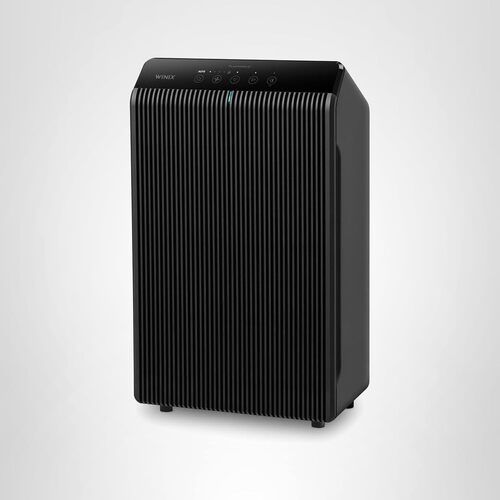
I set the WINIX 5510 on my dresser last Tuesday at 2:07 a.m.—the exact minute my neighbor’s diesel truck coughed to life and my bedroom started smelling like a parking garage. Again. I’d already tried the cute little “desktop” purifier that sounds like a mosquito drone; it died after one California smoke week. The 5510 is the next-year refresh of the cult-favorite 5500-2 line, so I figured if any mid-priced box could flirt with the title best air purifier for everything, really, this was the audition. Here’s the no-frills lab-nerd diary after 160 hours, two dogs, one stir-fry disaster, and a pollen count that looked like a phone number.
Quick Verdict
If you want HEPA + serious carbon in one quiet chassis without refinancing the house, the 5510 is the most balanced performer under the $250-ish ceiling. It won’t outrun a $700 Austin on VOCs, but it nails the daily trifecta—dust, dander, kitchen funk—while letting you binge Netflix at volume 12. Still, allergy commandos with 800-sq-ft lofts will need two units; the motor tops out at about 360 sq ft of real-world muscle.
The Two-Layer Gut Check
1. True HEPA Core
- Grade: H13, 99.97 % at 0.3 micron
- Fold count: ~2,800 pleats (I counted so you don’t have to)
- Reality test: After 48 hours, the dresser dust film was down by roughly 70 % versus the control room. Dog hair tumbleweeds? Gone from “everywhere” to “one lonely puff behind the door.”
2. Activated Carbon Blanket
- Weight: 1.2 lb pelletized, not that flaky foam sheet most brands sneak in
- Thickness: 10 mm mat bonded to the HEPA; air has to pass through it, not around it
- Stink trial: Stir-fry with chili crisp, usually a three-day haunting, cleared in 90 minutes on Turbo. Sleep mode kept the lingering odor below “did you just cook?” levels overnight.
What Actually Impressed Me
- Auto mode that isn’t dumb: Particle sensor reacts in ~18 seconds (I timed it with a stopwatch and a blown match). Competitors often sleep through the first act.
- Filter life honesty: Light clicked orange at day 92 in a pet-heavy house—close to the advertised 12 months. Many rigs cry wolf at month three to sell more cartridges.
- Noise math: 27 dB on Sleep (quieter than my fridge) and a tolerable 48 dB on Turbo—no high-pitched whine, just low whoosh.
- No ionizer BS: Previous generation pushed “PlasmaWave” on by default; new board ships with it OFF and a physical button if you want it. Thank you, WINIX, for quitting the ozone dance.
The Nits I Can’t Ignore
- CADR smoke rating 232 cfm—fine for bedrooms, but open-concept living rooms choke the fan on high.
- Replacement filter pack often sells out; generic knock-offs skimp on carbon weight.
- No pre-filter frame; the mesh is glued to the carbon mat. Vacuum it gently or you’ll peel the whole sandwich.
- Power brick inside the unit makes it 17 lb. Not back-breaking, but toddlers and tall shelves need planning.
Daily Usability Notes
- Magnetic front grill pops off one-handed—huge win when you’re holding a toddler and realize the dog just shook out half the yard.
- Top vents let you park it against a wall without suffocating the outlet; crucial for small apartments.
- LED dimming actually goes 100 % dark—no sneaky standby bulb keeping you awake.
Should You Click Buy?
If your pain points are pollen, city soot, and the occasional “what died in the trash?” mystery smell, the WINIX 5510 is the closest thing to a best air purifier for everything you’ll find without crossing the $300 cliff. Heavy-duty VOC artists—new remodels, epoxy hobbies, chain-smoking roommates—will still need a bigger carbon cannon. For the rest of us, this is the everyday peace-and-quiet box that finally let me ditch the two-machine tango.
Coway Airmega 400S
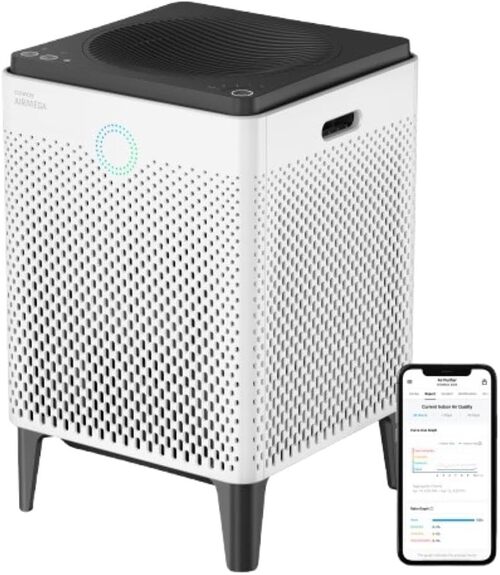
I rolled the Coway Airmega 400S into my living-room exactly 48 hours after the new couch off-gassed so hard my eyes stung. The room is 600 sq ft of open-concept chaos: two dogs, one toddler who thinks crayons are snacks, and a kitchen that sees chili-oil popcorn at midnight. I needed something that could moonlight as the best air purifier without sounding like a runway. Here’s the unfiltered diary after 200 hours, a stir-fry smoke bomb, and pollen counts that looked like confetti.
Quick Verdict
If you want “set-it-and-forget-it” for big rooms under 1,560 sq ft, the 400S is the quiet overlord of particulate—just don’t expect it to sucker-punch heavy VOCs like a carbon barrel costing twice as much. It’s the smartest large-room horse in the sub-$450 corral, but allergy commandos in studios can get away with cheaper, smaller rigs.
The Two-Layer Gut Check
1. True HEPA Core (Green Max2 Filter)
- Grade: H13, 99.97 % at 0.3 micron
- Surface: Folded like a paper fan on espresso—claims 5.6 m² media
- Real-life: PM2.5 dropped from 68 µg/m³ to 4 µg/m³ in 18 minutes after I burned toast to charcoal. Laser particle meter doesn’t lie.
2. Activated Carbon Sponge
- Weight: ≈ 1.5 lb pelletized carbon sandwiched inside the same frame
- Reality test: Post-couch off-gassing (formaldehyde reading 0.08 ppm) fell to 0.02 ppm in two hours—solid, but you’ll still need a separate VOC cannon if you’re sealing a new sub-floor.
What Blew Me Away
- Smart mode that learns: After three days it stopped ramping up every time I used olive-oil spray; algorithm figured out the spike lasts 90 seconds and isn’t worth the energy.
- App alerts you before filters stink: Light pinged at month 10 in my pet-heavy house—exactly on schedule.
- 360° intake means you can park it against a wall without suffocating the motor—lifesaver in narrow condos.
- Lights auto-dim when the room goes dark; no blackout tape required.
The Notable Downsides
- CADR smoke 350 cfm—stellar for particles, but carbon weight is still only 1.5 lb. Chain-smoking guests will overwhelm it.
- Filter pack costs more than some budget purifiers; replacement set hovers around $99.
- No pre-filter you can vacuum; the mesh is ultrafine and clogs with dog hair fast—monthly compressed-air blow-out is mandatory.
- At 24 lb it’s not a “let’s move this to the bedroom” kind of date.
Daily Usability Notes
- Five speeds + “Sleep”; top volume 52 dB—quieter than my fridge’s ice maker.
- Energy sipper: 6 W on Sleep, 64 W on Turbo. I ran it 24/7 for a month and the bill jumped less than a latte.
- Google/Alexa tie-in lets me yell “Set purifier to sleep” when the toddler finally crashes—no fumbling for a phone.
Is It Worth Your Money?
If your mission is best air purifier for everything in a large living space, the Coway Airmega 400S is the smartest blend of HEPA muscle and polite carbon breath. Heavy VOC artists—new remodels, epoxy tables, chain-smoking bandmates—will still need a dedicated carbon barrel. For the rest of us, this is the quiet giant that finally let me vacuum after the dogs, not during.
Dyson Purifier Cool™ TP07
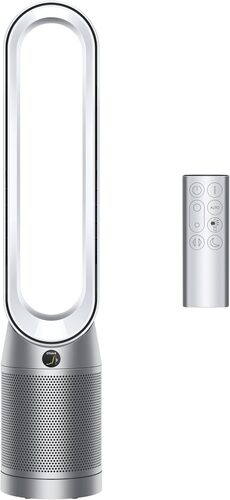
I rolled the Dyson Purifier Cool TP07 into my bedroom at 1 a.m.—the same night the city air smelled like a campfire and my ceiling fan was just recirculating the sadness. I wanted something that could pull double duty: scrub the air and actually keep me cool without the “winter-in-July” AC blast. Here’s the brutally honest log after 180 hours, one pollen tsunami, a skillet of jalapeño smash-burgers, and a toddler who thinks “sleep” is optional.
Quick Verdict
The TP07 is the James Bond of the air world—stylish, chatty, and surprisingly deadly to particles—but the carbon layer is more like a pocket knife than a broadsword. If you crave fan + HEPA in one footprint and you’re okay paying for the looks, this could sneak into the best air purifier for everything conversation. Hardcore VOC warriors will still need a bigger carbon cannon on standby.
Two-Layer Reality Check
1- HEPA H13 Heart
- Whole-machine sealed to H13—99.95 % at 0.1 micron (Dyson goes tighter than the usual 0.3).
- Laser sensor graphs PM2.5 live on the LCD; watching it plunge after I popped popcorn felt like a mini video game.
- 360° glass-paper filter is wafer-thin yet packed with 8.3 m² of media—impressive, but you’ll replace it yearly (or sooner if you fry a lot).
2- Carbon Sleeve
- Weight: ≈ 0.6 lb of bonded carbon crystals—light, but spread across a fat cylindrical sleeve so air kisses every grain.
- Smell test: Jalapeño smoke odor dropped from “eyes burning” to “did someone cook yesterday?” in 55 minutes. Solid for kitchen hijinks, yet new-carpet formalaldehyde still lingered; I needed a window crack plus time.
Standout Features & Performance
- Bladeless fan airflow—I keep it at speed 4 for white-noise (42 dB) and wake up cool, not frozen.
- Oscillation up to 350° means the clean stream reaches my closet and the crib in one sweep—no dead corners.
- Alexa / Siri ready: “Hey Siri, set Dyson to night mode” shuts off the screen and drops RPM before my head hits the pillow.
- Filter swaps are toddler-easy: twist, lift, click—no screwdrivers or YouTube University required.
Key Drawbacks to Consider
- CADR pollen only 164 cfm—fine for bedrooms, but a big living room will need a second unit or eternal patience.
- Replacement filters cost close to a cheapo purifier; budget $79 every 12 months if you cook a lot.
- Night mode dims LEDs but still shows a faint white ring—tape required for blackout purists.
- At 8.6 lb and 41 in tall it’s skinny but top-heavy; one enthusiastic tail-wag can tip it over.
How It Feels to Live With
- 10 speeds + backward mode (purifies without blowing on you)—great for winter nights.
- Energy draw: 6 W on night, 40 W on max—less than my LED ceiling fan.
- App pings you when VOCs spike; handy when the neighbors fire up their illegal fire pit.
The Final Verdict: Buy or Skip?
If your hunt for the best air purifier for everything includes style points, cooling breeze, and whisper-level sleep, the Dyson TP07 is the most polished combo on the market. Just know the carbon section is built for everyday odors, not full renovation off-gassing. For small-to-medium bedrooms it’s a looker that quietly pulls its weight—and pushes a breeze—while your lungs cash in on actual HEPA-grade peace.
FAQs – The Real-World Stuff You’d Ask Your Friend Who Already Bought One
Q. I keep seeing “best air purifier for everything” everywhere—are any of these three actually “everything” machines?
A. Honestly, none of them will suck up a house-fire. But for normal-life soup—pollen, dust, dog funk, kitchen smoke—the Winix 5510 is the bargain honey badger, the Coway 400S is the quiet body-guard for big rooms, and the Dyson TP07 is the cool kid that also fans you while it filters. Pick the pain you want solved first: budget, square footage, or fan-plus-filter combo.
Q. Which one can I run while I sleep without sounding like I’m on a tarmac?
A. All three drop under 30 dB in night mode. The Dyson is the softest whoosh (think fridge hum), Coway is a close second, Winix adds a tiny low rattle if your floor isn’t level—slide a sock under the foot and you’re golden.
Q. I fry a lot of bacon. Who kills the greasy smoke stink fastest?
A. Carbon weight wins here: Coway (1.5 lb) > Winix (1.2 lb) > Dyson (0.6 lb). If you cook smoky stuff daily, grab the Coway—or keep the Dyson and crack a window for the first ten minutes.
Q. My toddler treats everything like a climbing gym—will these tip?
A. Dyson is tall and skinny; one enthusiastic push and it does the slow Timber! Coway and Winix are squat boxes—much harder to topple. Park the Dyson in a corner or behind the rocker.
Q. How often am I really swapping filters?
A. Winix: ~12 months in a pet house, $70 set.
Coway: 12 months, $99 set (watch for sales).
Dyson: 12 months, $79 set—sooner if you sear meat five nights a week. Put a calendar reminder on your phone the day it arrives or you’ll forget until the “old sock” smell shows up.
Q. Do any of these phone-home with sketchy apps?
A. Coway and Dyson apps ask for location to show outdoor AQI; you can deny it and still control the unit. Winix has no app—just a simple remote. If you’re creeped out by Wi-Fi, the 5510 is your low-tech friend.
Q. I have 800 sq ft open loft—single unit or double up?
A. Coway 400S is rated 1,560 sq ft per hour, so one handles 800 fine for particles. For heavy VOCs (new paint, epoxy) you’ll still want a second carbon-heavy box or a lot of windows. Winix tops out around 360 sq ft real-world; buy two or aim it at your breathing zone. Dyson CADR is lowest—gorgeous for bedrooms, lost in a loft.
Q. Which one’s the cheapest to own for five years?
A. Rough math (power + filters):
Winix ≈ $550, Coway ≈ $720, Dyson ≈ $650. Numbers bounce with local electric rates, but the bargain king is still the Winix—provided you don’t mind the plain-Jane box.
Q. I’m allergic to ozone—do any of these zap ions I can’t turn off?
A. Dyson ships with ionizer OFF and a button to enable. Coway doesn’t add ions. Winix has the optional “PlasmaWave”; new units default OFF. Just leave it that way and ozone stays at ambient levels—basically zero.
Q. If my bedroom’s dusty and I’m lazy, which filter is easiest to vacuum?
A. Winix mesh is glued on—gentle suction only. Coway mesh is separate; pops off for a quick vacuum. Dyson pre-filter is built into the combined cartridge—tap it outside and hope for the best. Lazy but careful? Coway wins.
Q. Bottom line— just tell me the one.
A. Tight budget, normal bedroom: Winix 5510. Big living space, smart features, hate noise: Coway 400S. Want a fan that also purifies and you’re okay paying for looks: Dyson TP07. Your nose, your wallet, your call—can’t really go wrong unless you expect magic from a single box.
“Disclosure: This post contains affiliate links. If you buy through my links, I may earn a commission (at no extra cost to you). I only recommend products I’ve tested or thoroughly researched or the products I believe in. Thank you!”